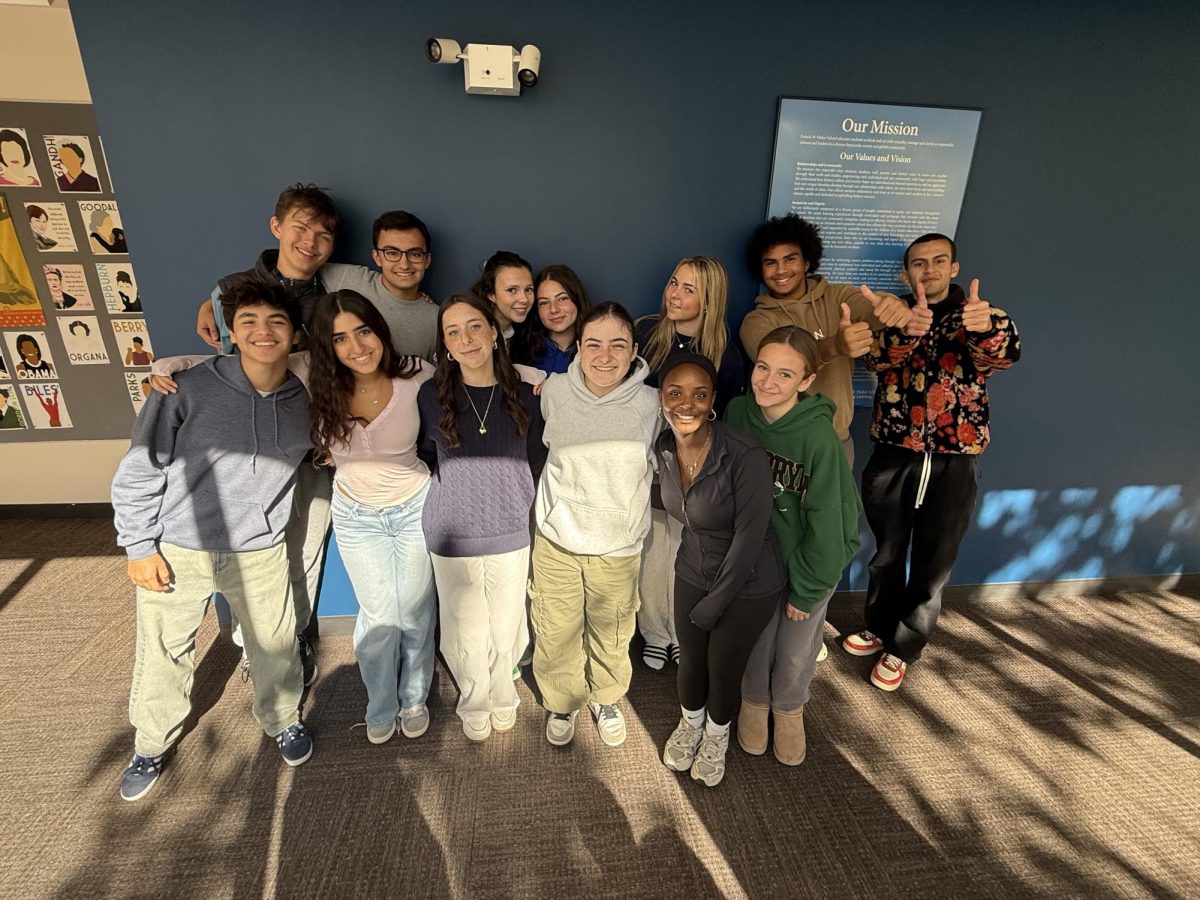
Last spring, Upper School learning resources teacher and Department Co-Chair Val Ginnan along with Upper School counselor Kirsten Williams introduced a new program called Peer Helpers. The program was created with the intention of giving students a peer support system and strengthening the Parker community. “Students can be powerful resources for each other, and this program will strengthen our community by encouraging empathy, connection, and problem-solving,” Ginnan said.
Ginnan and Williams created Peer Helpers to provide additional resources to support students with both academic and social life throughout their high school careers. “We know that high school can be exciting but also challenging—whether academically, socially, or emotionally,” Ginnan said.
As of this fall, students can now contact Peer Helpers for support directly by emailing the new Peer Helpers email, talk to a Peer Helper in person, or have Ginnan or Williams connect them with assistance. Peer helpers can also reach out to students to offer their assistance. Meetings between students and peer helpers can take place any time throughout the week that is convenient for both parties.
While Ginnan and Williams acknowledge that many of the things that students deal with, occur outside of school, boundaries such as where students can meet are still expected to be upheld. “We definitely want to limit it to school, but we know that a lot of the things that students might be wrestling with or navigating are happening outside of school,” Williams said, “so we definitely want to be mindful of people’s schedules. So sure you might like to reach out outside of school hours, but I would not want anyone going to someone’s house or crossing a boundary that they don’t feel comfortable meeting.”
The Peer Helpers program was designed specifically to give students a “safe, approachable option for support from fellow students who are trained to listen, understand, and connect their peers with resources when needed,” Ginnan said.
The program resonates with Peer Helper and junior Raiva Lessing who understands that sometimes talking to a peer who is going through similar experiences is more helpful than talking to an adult. “Being a peer helper, we understand students the most because we are in the position that they are, which is why we’re able to relate to them more and give advice that might be more helpful than an adult,” Lessing said.
Three years ago, when Williams first joined Parker as a counselor, discussions of how to get students’ involved in improving their own wellness began. While attending the American School Counselors Association Conference in the summer of 2024, Williams connected with an organization called Peer Helpers, which gave her inspiration on how to incorporate students as a key part in ensuring wellness in the Parker community. Since then, Ginnan and Williams researched, planned, recruited, and trained the 2025-2026 peer helpers, with the intention of continuing to shape the program while gathering feedback from its first year of running.
“I’m really, really excited about this position,” Peer Helper and junior Ayla Pressman said. “I feel like a lot of times students always say that they want to have another student to go to with their problems or a student to be able to help teach them, and so I think this peer helper role gives them an outlet.”
To begin the process, Ginnan and Williams gave presentations to eighth through tenth grade students on what Peer Helpers is and invited all students in the three grades to apply. The application consisted of a short response Google form submitted along with a teacher reference. Ginnan and Williams reviewed each application thoroughly and used the teacher feedback to narrow down the list of candidates. Ginnan and Williams interviewed each of the candidates on this list and invited the final 14 candidates to join the Peer Helpers program. They selected ten junior Peer Helpers and four sophomore Peer Helpers for this school year.
Ginnan said that there were many highly qualified candidates, making the selection process difficult, but that they “looked for students who demonstrated empathy, good listening skills, reliability, and a genuine interest in supporting their peers.”
Lessing, one of the selected peer helpers, applied because she has an interest in majoring in psychology, which ties into the social advice aspect of the program. “I think mental health is a big issue, not only at Parker, but everywhere else, and I wanted to do what I could to contribute to help,” Lessing said.
Ginnan also said that she and Williams aimed to select a “diverse group representing different grade levels, interests, and experiences so that all students could feel they have someone relatable to turn to.”