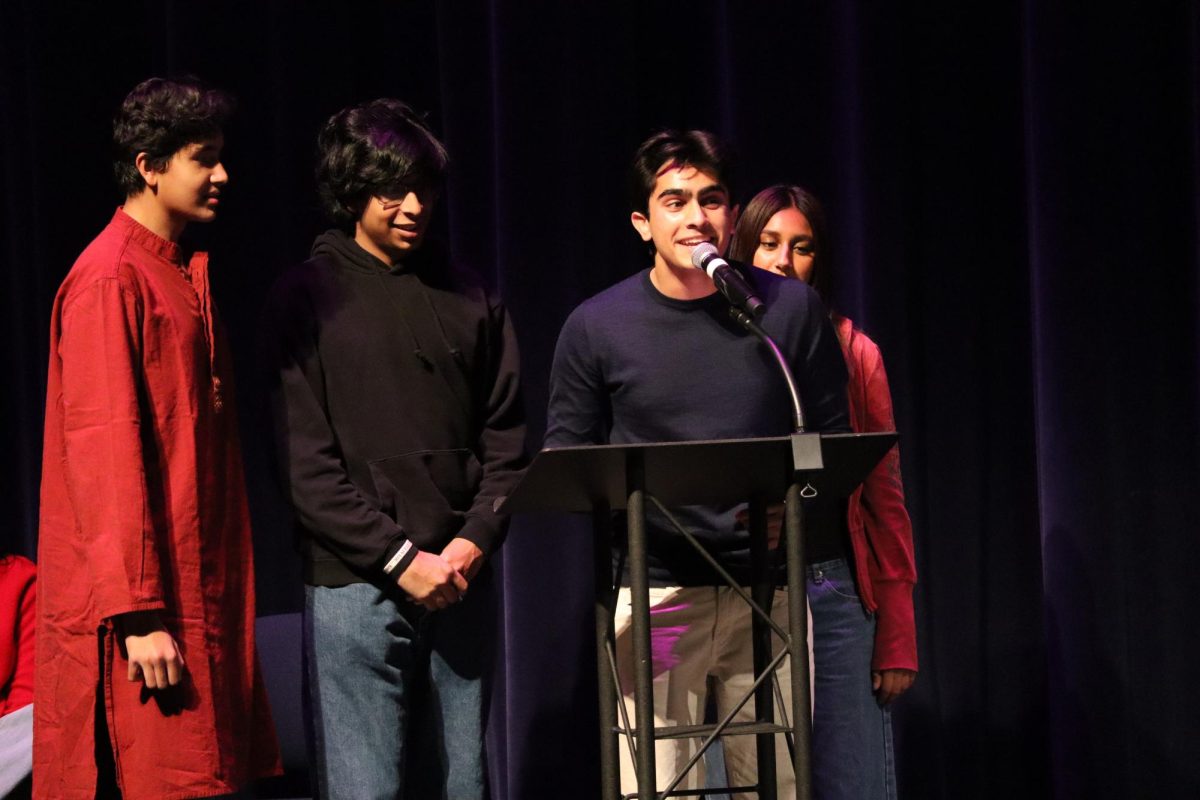
On October 29, the South Asian Student Alliance (SASA) hosted a MX educating Parker students about Diwali. It included segments on how different regions in South and Southeast Asia celebrate Diwali, which is also known as the “celebration of lights.” Diwali is one of the biggest celebrations in South and Southeast Asia, and is dedicated to the homecoming of Lord Rama, his wife Sita, and his brother Lakshmana after 14 years exiled in a jungle.“[Tamil-Nadu] does not celebrate Diwali on the return of King Rama to Ahyodhya, it was to celebrate the slaying of the evil demon king Nakasura,” senior and SASA co-head Dhruv Moorthy said. There is not one way of celebrating Diwali, and there is no single story to celebrate about. “We celebrate by having big parties with family, lighting candles, exchanging gifts, and eating lots of food,” SASA member Maya Mote said.
Students spoke about their ties to Gujrat, Punjab, Tamil Nadu, and Malaysian cultures and the difference between how Diwali is celebrated in each of these regions. For example, some discussed going to temple, while others focused on enjoying the celebration with family and friends. Senior and SASA co-head Lia Bahri presented on the Punjab region. Bahri celebrates Diwali by “playing card games, going to parties, lighting fireworks and sparklers, and eating different traditional Indian foods.”
“My favorite part of Diwali is eating good food and spending quality time with friends and family,” Moorthy said.
The Diwali MX also showcased Bollywood dancing and traditional Indian dancing. The Walter Payton Masti Dance team came to Parker and performed a variety of dances with many South Asian influences, and they welcomed student volunteers to participate in an on-stage dance tutorial.
Diwali is celebrated by over one billion people all over the world. Unlike any other Indian holiday, Diwali lights up India because “Diwali is the festival of lights, and people like to light diyas (small lamps) around their homes,” Moorthy said. “Due to this, India is a lot more lit up than usual during Diwali, which you can even see on satellite images.”